Current Series Teaching Plan
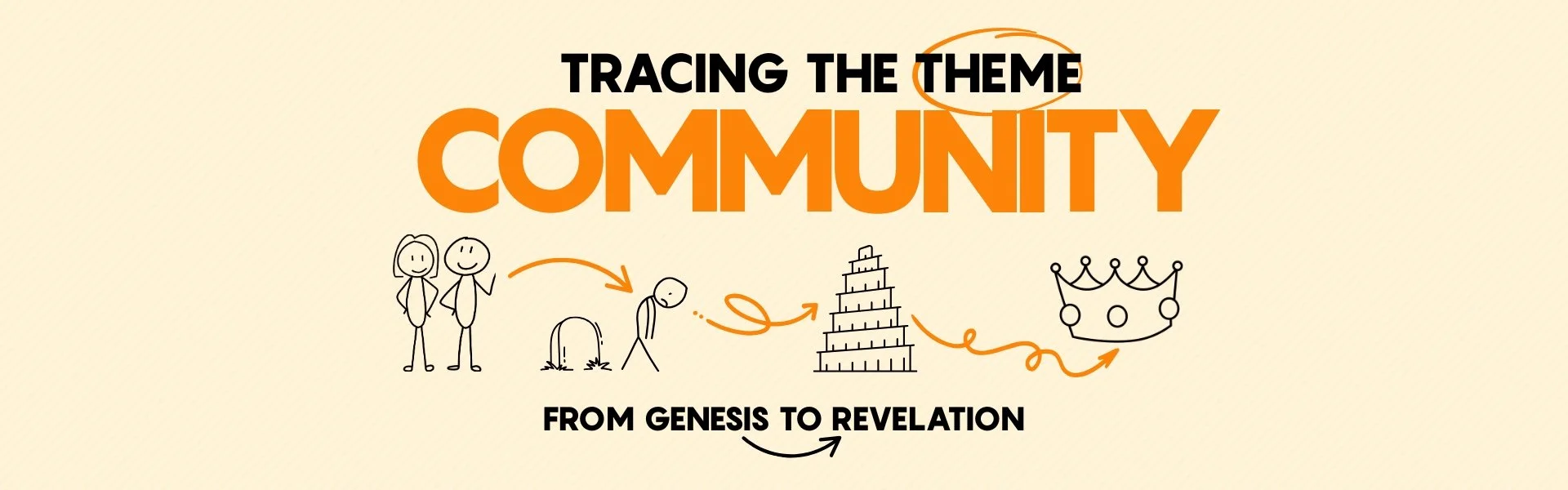
Tracing the Theme: Community
In this series, we’ll trace the theme of Community from the first pages of Genesis to the last pages of Revelation. Students will see that community isn’t a human invention but part of how God made us! Our goal is for students to see that the kind of community we want to build this year is the same kind of community that we see from the first pages of the Bible to the last.
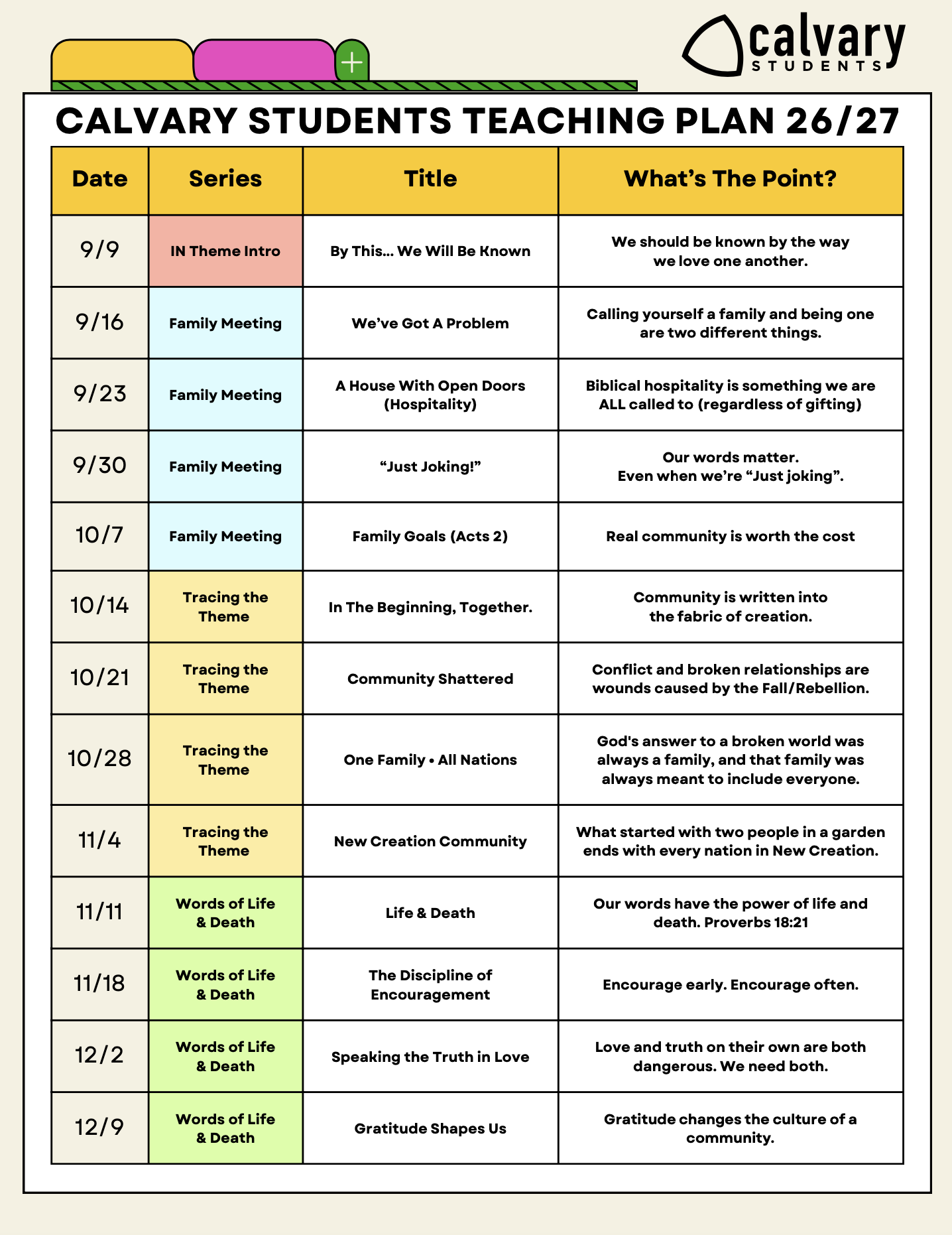
October 14
Topic: In the Beginning, Together
Big Point: Community is not a human invention. It’s written into the fabric of creation.
Key Passages: Genesis 1:26-28; John 1:1-3, 14; Genesis 2:18, 25
What We’ll Talk About:
This week we’ll start at the very beginning of the Bible to see just how important community is to God. We’ll see that God has existed in community (Father, Son, and Holy Spirit) for all of eternity, and that He made us in His image. We’ll look at Genesis 2, where God says for the first time that something is “not good” (for the man to be alone). Students will see that the longing to be known, loved, and included isn’t naive or unrealistic, but it’s actually part of how God designed us. They’ll be challenged to think about whether anyone really knows the real version of them, and to take a step toward being more honest with others.
Parent Follow-Up Question:
When have you felt most fully known and accepted by someone?
October 21
Topic: Community Shattered
Big Point: Conflict and broken relationships are wounds caused by the fall.
Key Passages: Genesis 3:6-13, 16; Genesis 4:6-9
What We’ll Talk About:
This week we’ll look at how quickly the community God created fell apart. When Adam and Eve rebelled, the result was hiding, blame, and a desire to control instead of love. We’ll see how this brokenness spread from humanity’s relationship with God, to a husband and wife, to two brothers in the story of Cain and Abel. Students will recognize that our instincts to get defensive, win arguments, keep score, or give someone the cold shoulder go all the way back to Genesis 3. They’ll be challenged to name one relationship where they feel that pull and to choose to do the opposite on purpose.
Parent Follow-Up Question:
What’s a healthy way to respond when someone wrongs us, instead of getting back at them?
October 28
Topic: One Family, All Nations
Big Point: God’s answer to a broken world was always a family, and that family was always meant to include everyone.
Key Passages: Genesis 11:1-4; 12:1-3; Acts 2:5-11
What We’ll Talk About:
This week we’ll see how God responded to a broken, scattered world by choosing Abram and promising that “all the families of the earth” would be blessed through him. We’ll trace that promise from the Tower of Babel to Pentecost in Acts 2, where people from every nation heard the gospel in their own language. We’ll also look at how Paul says that everyone who belongs to Jesus is part of Abraham’s family, and that Jesus tore down the wall of hostility between people. Students will be challenged to join God in welcoming people into His family.
Parent Follow-Up Question:
Who is someone that welcomed you in when you were new, and how did it change things for you?
November 4
Topic: New Creation Community
Big Point: The story that started with two people in a garden ends with every nation in the new creation.
Key Passages: Revelation 21:1-4, 24-26; 22:1-5
What We’ll Talk About:
This week we’ll finish the story by looking at the last two chapters of the Bible. We’ll see how every thread we’ve traced (hiding, shame, nations, names, and the curse) gets resolved when God returns to dwell with His people. We’ll see a city with gates that never close, the tree of life restored for the healing of the nations, and people who will see God’s face with nothing left to hide. Students will be challenged to stop hiding from the people who are supposed to know them best, and to see that this group can be a small taste of the community that we will one day experience forever.
Parent Follow-Up Question:
Why do you think it’s so hard to share our struggles with other people?
This month on Sunday Mornings we are exploring our first Bible Study Tool: Asking Good Questions. We’re using seven questions to slow down and investigate any passage: Who, What, Where, When, Why, How, and “What surprises me?” . These questions help a careful Bible reader stop skimming and start actually seeing what’s there.